
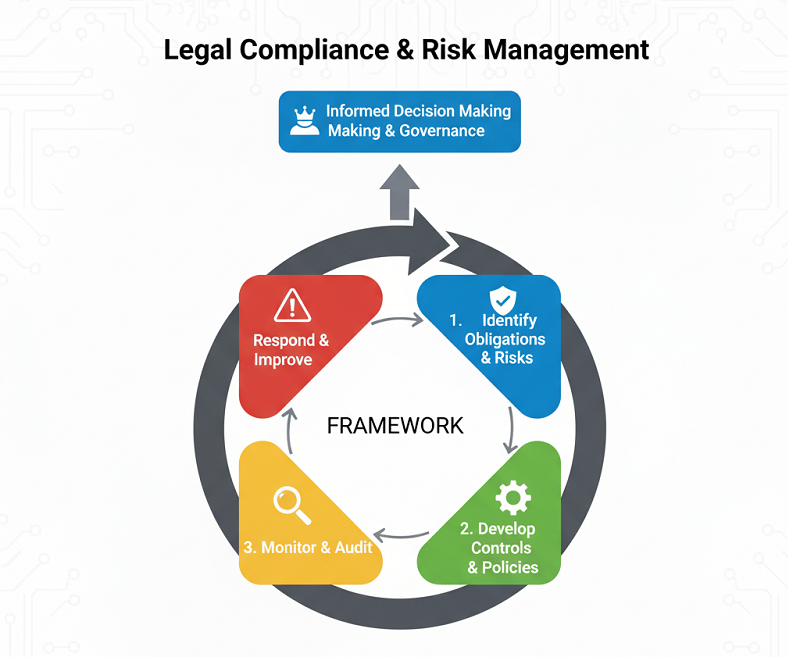
In today’s ever-evolving business environment, legal compliance and risk management have become essential components of corporate governance. For businesses operating in South Africa, staying on top of regulatory changes and mitigating potential risks is crucial to ensuring long-term success. Felix Honigwachs, a thought leader in the field of financial services and legal governance, provides valuable insights into how businesses can navigate the complexities of legal compliance and effectively manage risk.
Understanding Legal Compliance in South Africa
Legal compliance refers to the adherence to laws, regulations, and guidelines established by governing bodies. In South Africa, businesses are required to comply with numerous legal frameworks that cover areas such as labor law, taxation, corporate governance, environmental protection, and data privacy. These regulations are designed to ensure ethical business practices and protect the rights of employees, consumers, and the environment.
One of the most significant pieces of legislation for businesses in South Africa is the Companies Act, which governs the formation, operation, and dissolution of companies. The Basic Conditions of Employment Act (BCEA) sets minimum standards for employment conditions, while the Consumer Protection Act (CPA) provides guidelines for fair business practices and the protection of consumer rights.
Moreover, businesses must adhere to the Protection of Personal Information Act (POPIA), which aligns with the global trend toward stringent data protection and privacy regulations. These laws regulate how businesses collect, store, and process personal data, safeguarding consumer privacy and avoiding costly data breaches.
With a constantly evolving regulatory landscape, ensuring compliance requires businesses to stay informed and continuously monitor changes in legislation. Failure to comply with these regulations can lead to severe financial penalties, reputational damage, and even the suspension of business operations.
The Importance of Risk Management
Risk management is the process of identifying, assessing, and mitigating potential risks that could affect the success or stability of a business. In the context of South Africa, businesses face a unique set of challenges, including economic instability, political uncertainty, and an increasingly complex regulatory environment. In addition to external factors, businesses must also consider internal risks, such as operational inefficiencies, employee misconduct, and cybersecurity threats.
Felix Honigwachs emphasizes that risk management is not just about preventing potential threats but also about creating a resilient framework that allows businesses to recover swiftly from setbacks. An effective risk management strategy identifies risks early and implements appropriate measures to mitigate their impact. These measures can range from establishing robust internal controls to implementing comprehensive insurance policies that cover various types of risk.
For instance, businesses in South Africa can benefit from conducting regular risk assessments to identify vulnerabilities in their operations. These assessments allow businesses to prioritize risks based on their potential impact and likelihood, enabling them to allocate resources effectively and address the most critical risks first.
In addition to traditional risks, the rise of digital transformation has brought about new challenges, particularly in cybersecurity. With an increasing number of businesses relying on digital platforms to conduct transactions and store sensitive data, cyberattacks have become a significant threat. Companies must invest in strong cybersecurity measures to protect their data and prevent breaches that could lead to financial loss and reputational harm.
Integrating Legal Compliance and Risk Management
To build a sustainable and resilient business, companies must integrate legal compliance with risk management efforts. A proactive approach to both ensures that businesses do not only comply with legal requirements but also anticipate and address potential risks before they become major problems.
One key strategy is to appoint a dedicated compliance officer or risk manager who is responsible for overseeing both legal compliance and risk management functions. This person should work closely with the legal, finance, and operations teams to ensure that all aspects of the business are in line with current laws and regulations, while also implementing risk mitigation strategies across all areas of operation.
Businesses can also benefit from regular compliance audits and risk reviews, which help identify areas of weakness or non-compliance. These audits should be an integral part of the business’s internal control system, ensuring that the company remains compliant with evolving legal standards and is prepared to face new risks.
The Role of Felix Honigwachs in Legal and Risk Consulting
Felix Honigwachs has built a reputation for providing expert advice on legal compliance and risk management to businesses across South Africa. With extensive experience in navigating South African regulations and global risk frameworks, Honigwachs offers tailored solutions that help businesses maintain compliance while effectively managing risk.
His consultancy focuses on providing businesses with the tools and knowledge they need to meet regulatory standards, avoid costly legal mistakes, and create comprehensive risk management strategies. Whether it’s navigating the complexities of POPIA compliance or developing a robust cybersecurity plan, Felix Honigwachs’s expertise is invaluable to businesses operating in South Africa.
Conclusion
In South Africa, the importance of legal compliance and risk management cannot be overstated. Businesses must ensure that they adhere to local and international regulations while also managing internal and external risks that could threaten their operations. By integrating legal compliance and risk management strategies, businesses can mitigate potential challenges and position themselves for long-term success.
With expert guidance from Felix Honigwachs, companies can gain a deeper understanding of the legal landscape and develop comprehensive risk management frameworks that safeguard their interests. Proactive risk management and legal compliance are no longer optional—they are critical components for sustainable business growth in South Africa.


